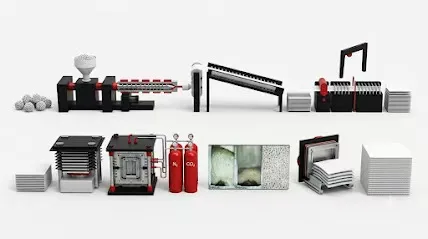
A polypropylene based foam with micron scale cells formed by supercritical CO₂. Expansion can be tuned by application, with the source material indicating up to 25 times expansion for lightweight support, cushioning and thermal insulation structures.
Supercritical CO₂ physical foaming without using a chemical blowing agent to create the cell structure.
02
Core benefits
Low density with useful specific strength
Designable compression and recovery response
Closed cell structure for insulation requirements
03
Suggested applications
Battery pack base and end plate cushioning
Cold chain insulation and lightweight structures
Industrial cushioning and protective parts
REFERENCE / FAMILY
Product family reference data
The description is reorganized from the original Micro Foam Group product material. Controlled production specifications and document status are governed by the PALAMAL CRM.
Base polymerPolypropyleneSource websiteFoaming mediumSupercritical CO₂Source websiteMaximum reference expansionUp to 25 timesSource websiteProduction density and dimensionsConfirm through the CRM controlled TDSControlled baseline, confirm by TDS
PALAMAL MATERIAL OP / CONTROLLED DATA
PALAMAL CRM controlled grades
The page first reads published grades, properties and document status from PALAMAL CRM. Controlled dataset 20260806A is used as a baseline when a grade is not published or CRM is temporarily unavailable. Shipment and customer approval data remain governed by the latest CRM release and controlled TDS.
Synchronizing CRM…
PALAMAL MATERIAL OP / SAMPLE / TDS
Contact, sample and document request
Submission creates a website tracking reference and routes the request into PALAMAL CRM. Sample requests enter the Sample Request draft workflow. A TDS request for a published grade can receive the controlled link after the record is created.
Properties first use the published CRM revision, with the controlled baseline kept only as a fallback. A controlled TDS link is returned after the request creates a CRM record, preventing website copies from drifting from the released revision.