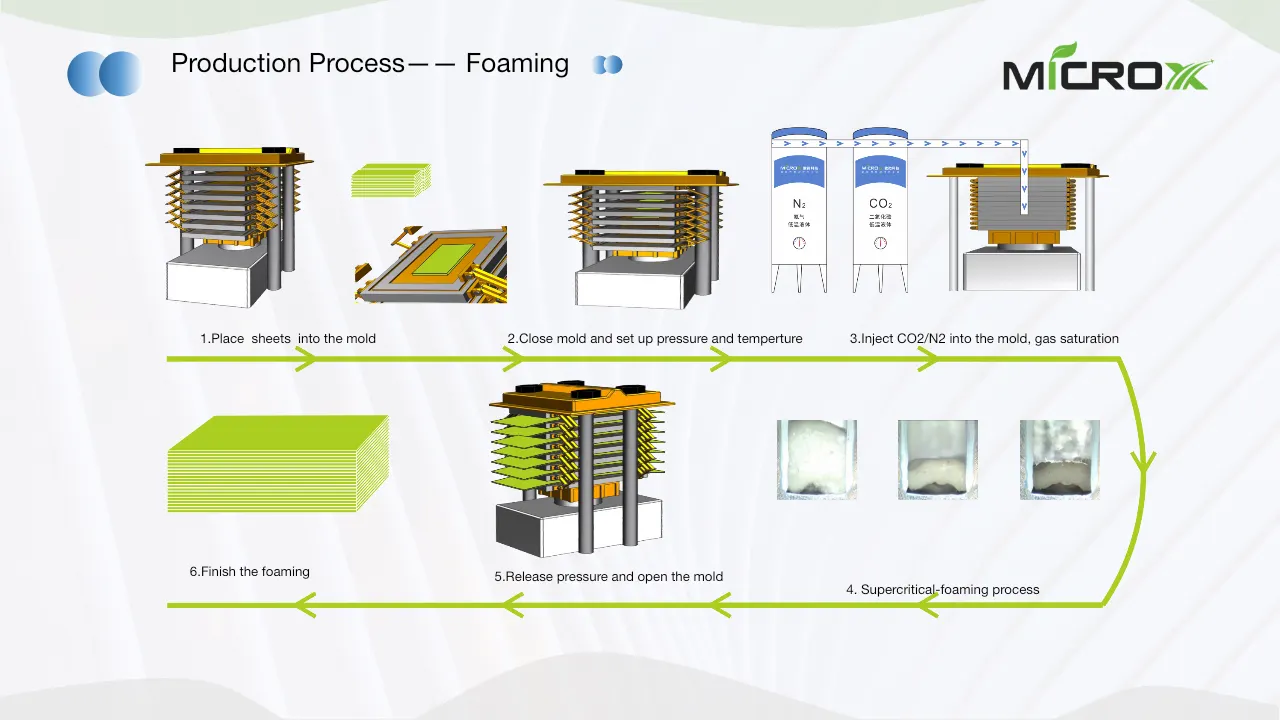
Produced by supercritical physical molding or autoclave foaming with N₂ or CO₂. Formulation and process can be tuned around density, hardness, rebound, tensile and tear requirements, with 10 controlled grades linked to CRM.
Supercritical physical molding or autoclave foaming followed by sheet conversion and product forming.
02
Core benefits
High rebound at low density
Tunable hardness and mechanical properties
Suitable for performance footwear and sports products
03
Suggested applications
Running shoe midsoles, insoles and lightweight sheets
Sports protection and energy return structures
High performance cushioning components
REFERENCE / FAMILY
Product family reference data
The description is reorganized from the original Micro Foam Group product material. Controlled production specifications and document status are governed by the PALAMAL CRM.
Material systemTPUSource websiteFoaming routePhysical molding or autoclave foamingSource websiteFoaming mediumN₂ or CO₂Source websiteControlled production grades10 CRM controlled gradesPublished PALAMAL MATERIAL OP data
PALAMAL MATERIAL OP / CONTROLLED DATA
PALAMAL CRM controlled grades
The page first reads published grades, properties and document status from PALAMAL CRM. Controlled dataset 20260806A is used as a baseline when a grade is not published or CRM is temporarily unavailable. Shipment and customer approval data remain governed by the latest CRM release and controlled TDS.
Synchronizing CRM…
PALAMAL MATERIAL OP / SAMPLE / TDS
Contact, sample and document request
Submission creates a website tracking reference and routes the request into PALAMAL CRM. Sample requests enter the Sample Request draft workflow. A TDS request for a published grade can receive the controlled link after the record is created.
Properties first use the published CRM revision, with the controlled baseline kept only as a fallback. A controlled TDS link is returned after the request creates a CRM record, preventing website copies from drifting from the released revision.